
California Notary Journal Rules & Thumbprint Requirements: Your Compliance Survival Guide
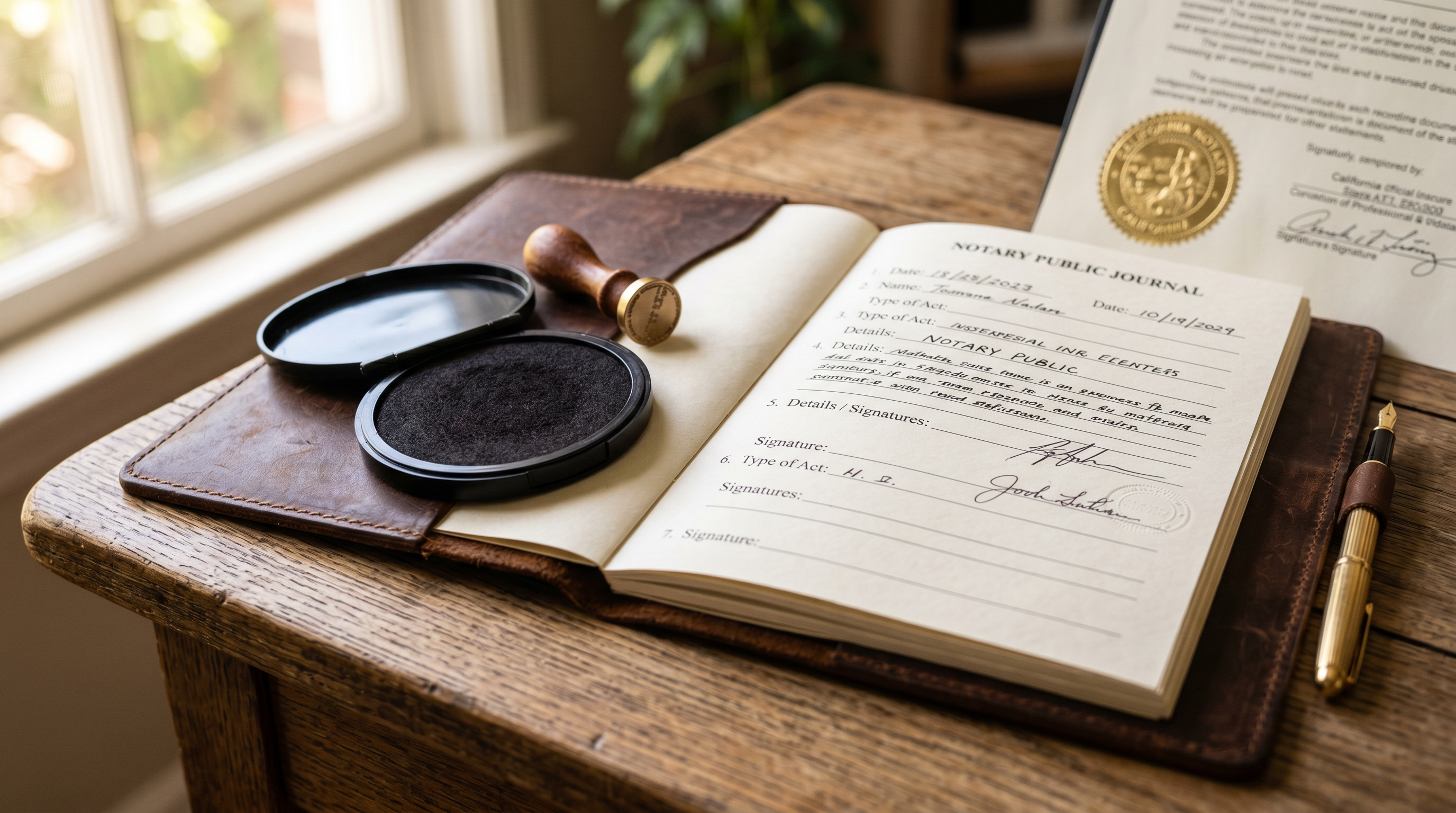
California Notary Journal Rules & Thumbprint Requirements: Your Compliance Survival Guide
The Journal That Could Save Your Career
Imagine this: You're summoned to a deposition over a disputed power of attorney. The signer claims they never appeared before you. Your heart races—until you flip open your notary journal. There it is: date, type of document, precise details, and yes, that right thumbprint. In seconds, your compliance survival guide turns potential disaster into dismissal.
For California notaries, the journal isn't paperwork—it's armor. Under The Notary Public Institute's training, we hammer home these rules because one skipped entry can expose you to liability. This guide unpacks California notary journal rules, notary thumbprint requirements California, and notary journal best practices to fortify your practice. Whether you're a new applicant or seasoned pro, master these for unshakeable confidence.
Decoding California Notary Journal Rules
California law mandates a sequential, chronological journal for every notarial act—except jurats on voter registrations. It's your firsthand record, admissible in court, proving due diligence. Miss it, and you're vulnerable to forgery claims or signer disputes.
Core Elements of Every Journal Entry
Each entry demands specifics. Skimp here, and your defense crumbles. Here's the blueprint:
- Date and time of the notarial act—precise to the minute.
- Type, title, or general description of the document (e.g., "Quitclaim Deed" or "Power of Attorney").
- Character of every person whose signature notarized—full name, address, and credible ID type.
- Type of ID examined and details like driver's license number or expiration.
- Signature of person whose ID verified (not always the signer).
- Fee charged, if any.
- Thumbprint—more on this lifesaver next.
Pro tip: Use black or blue ink, never pencil. Keep it sequential; gaps scream sloppiness in audits.
Notary Thumbprint Requirements California: Know When It's Non-Negotiable
Thumbprints aren't optional flair—they're mandatory shields for high-stakes docs. California Government Code Section 8206(a)(2)(E) requires a right thumbprint (or left if right unavailable) in your journal for:
- All real property documents conveying title, leasing for over a year, or secured transactions—think deeds, mortgages, liens.
- Every power of attorney, unless excepted (e.g., certain trusts).
For other acts? Not required, but smart notaries capture them anyway for extra notary liability protection. Use an inkless thumbprint pad—clean, mess-free, court-accepted. If a signer refuses? Note it prominently: "Thumbprint refused—reason stated." Never proceed without documenting.
One overlooked thumbprint on a deed can unravel years of trust. Don't let it be yours.
Notary Journal Best Practices for Ironclad Compliance
Daily Habits That Bulletproof Your Records
- Enter immediately—never batch at day's end. Memory fades; disputes don't.
- Photocopy IDs and staple if space allows, or note details verbatim.
- Cross out errors neatly—initial and date corrections.
- Store securely: Locked, fireproof safe. Surrender to county clerk within 30 days of commission end.
- Backup digitally (scans only—originals rule), but verify photocopies match.
These California notary compliance guide staples, drilled in our training, slash audit risks and fortify notary liability protection. A pristine journal? It's your get-out-of-court-free card.
Your Path to Professional Peace of Mind
Mastering California notary journal rules and notary thumbprint requirements California isn't drudgery—it's empowerment. Picture notarizing with swagger, knowing your journal stands as sentinel against chaos. We've covered these duties in detail during The Notary Public Institute training, but for deeper dives, grab our comprehensive Guidebook.
In the Tips & Tricks category, this is your survival edge. Stay compliant, stay protected—your career deserves it. What's one journal habit you'll tweak today?
Written by Chris Morgan
Expert Notary Advisor at The Notary Public Institute
Ready to Start Your California Notary Journey?
Don't leave your commission to chance. Join thousands of students who trust The Notary Public Institute for the most comprehensive, easy-to-follow training in California.
Stay Ahead of California Notary Changes
Join our community of 5,000+ notaries. Get state-level updates, compliance tips, and career resources delivered to your inbox.
Related Articles
California Acknowledgment vs Jurat: What Each Certificate Means
California Acknowledgment vs Jurat: What Each Certificate Means Picture a busy afternoon. A signer slides a deed across your desk. "Acknowledgment or jurat?"...
Read ArticleCalifornia Notary Appointment Workflow: From Greeting to Journal
California Notary Appointment Workflow: From Greeting to Journal Imagine your doorbell rings. A signer stands there with a stack of papers. Your heart races....
Read Article