
California Notary Application Mistakes: Avoid Rejection and Ace Your CA Commission Process
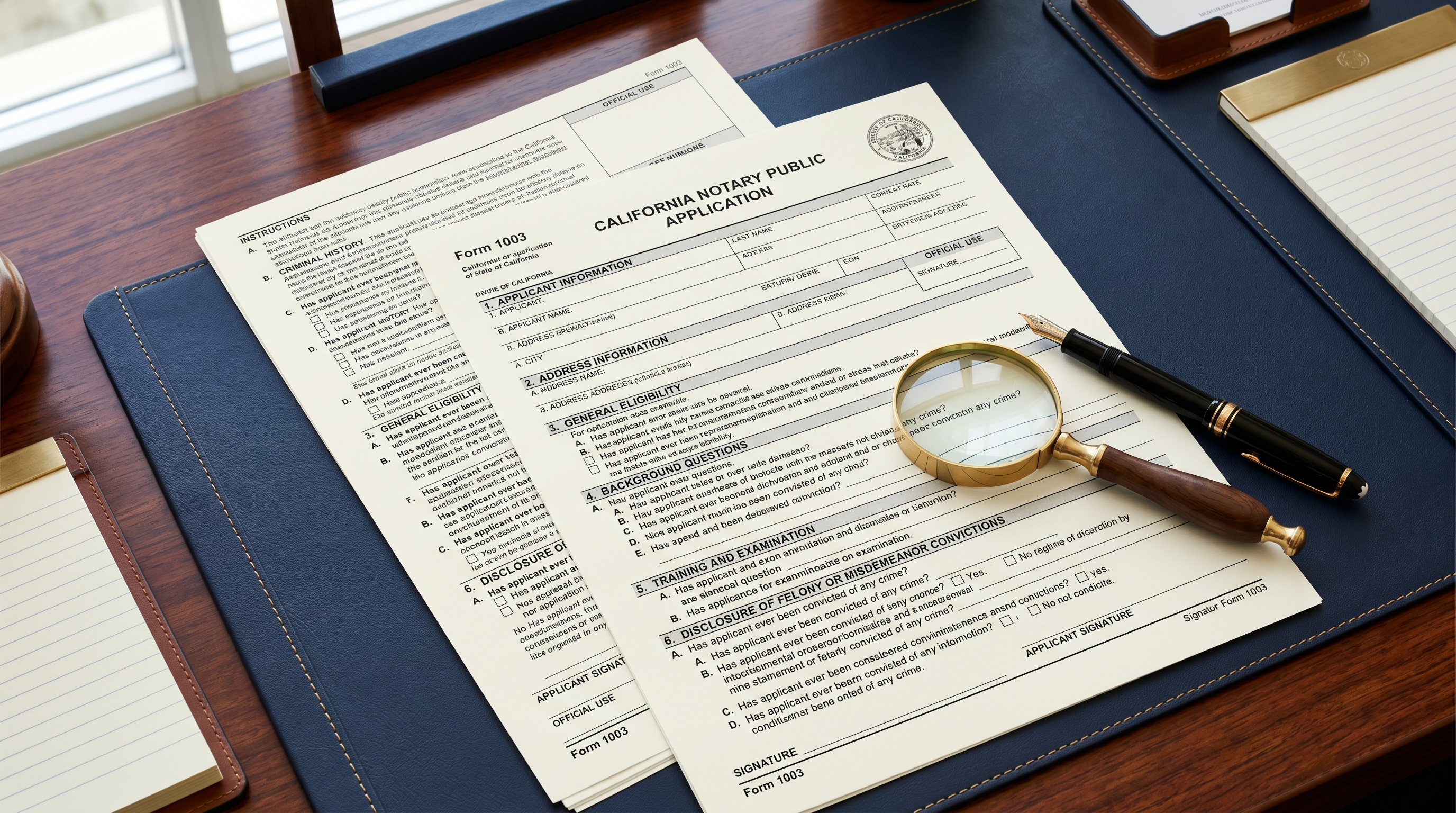
California Notary Application Mistakes: Avoid Rejection and Ace Your CA Commission Process
Imagine pouring weeks into your notary training, securing your bond, and rolling your fingerprints just right—only to have your California notary application bounced back with a curt rejection notice. It's a gut punch that hits thousands of aspiring notaries each year. But here's the good news: most California notary application mistakes are entirely preventable with a little foresight and precision.
The California notary commission process demands perfection on a multi-page form packed with fine print. One slip, and you're back to square one, delaying your path to earning that commission. In this guide from The Notary Public Institute, we'll dissect the top pitfalls leading to CA notary app rejection, share how to fill out CA notary application flawlessly, and arm you with pro tips to sail through approval.
The California Notary Commission Process: A Quick Roadmap
Before diving into mistakes, let's map the terrain. To become a California Notary Public, you must complete a state-approved six-hour training course, obtain a $15,000 surety bond, submit live-scan fingerprints, and file the official application with the Secretary of State—along with a $40 fee. The form itself spans several pages, covering personal details, bond info, county selection, and oaths. Miss a detail, and rejection looms.
Rejections often stem from overlooked checkboxes or mismatched data. Our students at The Notary Public Institute sidestep these traps routinely, securing commissions faster than average. Ready to join them?
Top California Notary Application Mistakes and How to Dodge Them
We've reviewed countless rejected forms. These errors repeat like clockwork, turning dreams into delays. Here's your battle plan against CA notary app rejection.
Mistake #1: Sloppy or Incomplete Personal Information
Your name must match your ID exactly—middle initials, suffixes, the works. Fuzzy handwriting? Instant red flag. Contact details get botched too: invalid emails bounce notifications, and wrong phone numbers leave you in the dark.
Fix it: Print legibly in black ink only. Triple-check against your driver's license. Use your most reliable email—the one you'll monitor daily.
Mistake #2: Bond Blunders That Sink Applications
The $15,000 bond must be an original from a licensed provider, filled out completely, with your exact name and dates. Photocopies? No go. Expiration mismatches? Rejected.
- Attach the bond securely—don't staple over signatures.
- Verify the bonding company's seal and notary acknowledgment.
- Ensure coverage starts no earlier than your training completion date.
Mistake #3: Fingerprint Fiascos and Missing Receipts
Live-scan fingerprints are mandatory, but forgetting the receipt—or using an outdated one—is a classic. Results take 4-6 weeks; submit your app only after clearance, or risk suspension later.
Pro tip: Use form DOF-0518LL (Rev. 05/2023). Note your live-scan transaction number precisely on the application.
Mistake #4: County Confusion and Journal Oversights
Pick your primary county wisely—it's where you'll principally work. Vague descriptions or forgetting to declare a compliant journal (hardbound, 1,000 pages min.) trigger returns.
- List your county clearly (e.g., "Los Angeles" not "LA").
- Confirm journal meets CA standards: tamper-evident, sequential entries.
- No electronic journals for new applicants—stick to tangible ones.
Mistake #5: Signature, Oath, and Fee Fumbles
Sign where indicated, but only after reading the oath aloud (yes, really). Checks must be payable to "California Secretary of State" for $40—no cash, no cards. Pencil marks or erasures? Toss it and start over.
How to Fill Out CA Notary Application: Step-by-Step Mastery
Armed with pitfalls, here's your foolproof walkthrough for the California notary application:
- Prep docs: Course certificate, bond, fingerprints receipt, two 2x2 photos, journal.
- Fill form: Black ballpoint pen, no abbreviations. Page 1: Personal info. Page 2: Bond/education. Page 3: County/journal. Page 4: Oath/signature.
- Review ruthlessly: Does everything match? Initial each page.
- Assemble packet: App on top, then bond, cert, fee check. Mail certified to Sacramento.
- Track it: Processing takes 8-10 weeks. Use the SOS portal.
Precision isn't optional—it's your commission's lifeline. Nail the details, and the golden seal is yours.
Seal Your Success: Next Steps
Dodge these California notary application mistakes, and you'll ace the commission process on the first try. For state-approved training that preps you beyond the form—complete with error-proof checklists—head to our New Applicant page. Your notary journey starts flawless.
Don't let a technicality derail you. Get commissioned, get notarizing, get ahead.

Chris Morgan, Founder of The Notary Public Institute, provides expert guidance and state-approved training for California notaries.
Written by Chris Morgan
Expert Notary Advisor at The Notary Public Institute
Ready to Start Your California Notary Journey?
Don't leave your commission to chance. Join thousands of students who trust The Notary Public Institute for the most comprehensive, easy-to-follow training in California.
Stay Ahead of California Notary Changes
Join our community of 5,000+ notaries. Get state-level updates, compliance tips, and career resources delivered to your inbox.
Related Articles
California Acknowledgment vs Jurat: What Each Certificate Means
California Acknowledgment vs Jurat: What Each Certificate Means Picture a busy afternoon. A signer slides a deed across your desk. "Acknowledgment or jurat?"...
Read ArticleCalifornia Notary Appointment Workflow: From Greeting to Journal
California Notary Appointment Workflow: From Greeting to Journal Imagine your doorbell rings. A signer stands there with a stack of papers. Your heart races....
Read Article